
Asset Tag Specialists — Kenya
Aluminium Asset Tags in Kenya for Reliable Asset Tagging
Aluminium Asset Tags in Kenya for Reliable Asset Tagging. FhoReal Tags Kenya provides professional aluminium asset tags and custom asset identification solutions for businesses, institutions and organisations across Kenya.
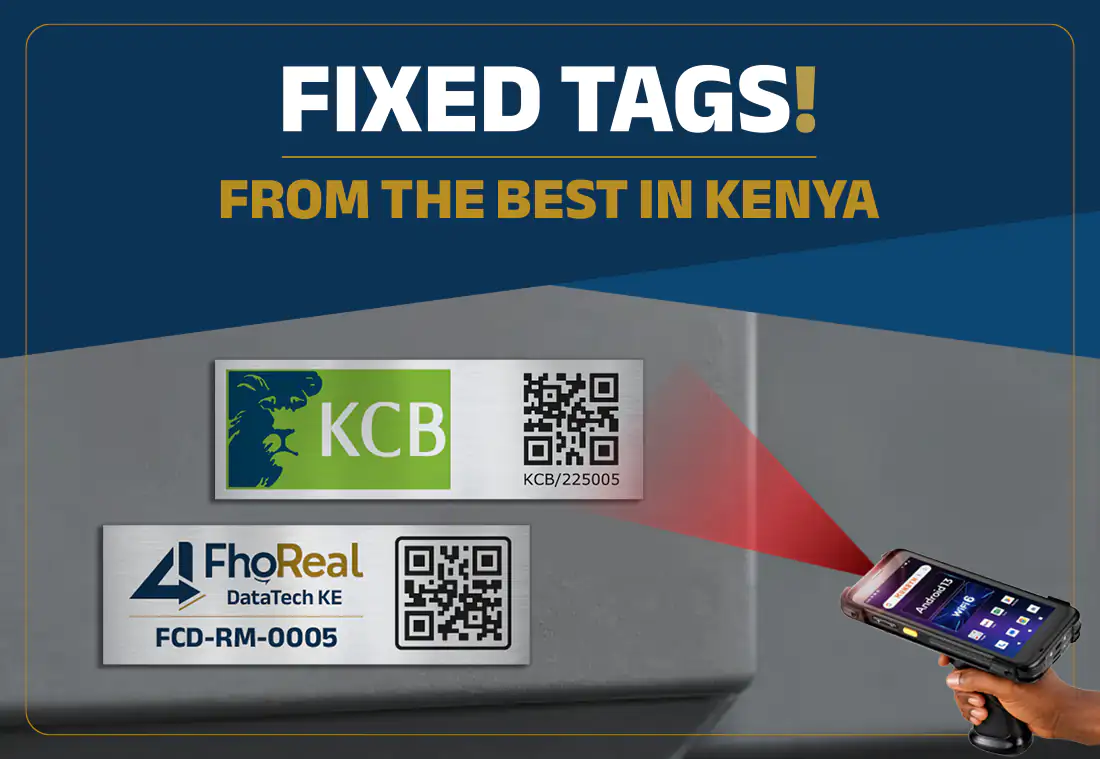
- Aluminium constructionDurable metal tags built to stay readable on handled, cleaned and audited equipment.
- Number, barcode and QRSequential numbering with a barcode or QR code on the same tag where you scan.
- Made to specificationSize, layout, finish and fixing are set against your assets, not a catalogue item.
- Supplied across KenyaQuotations and supply for businesses, institutions and organisations nationwide.
Specialist asset tags
Asset Tags in Kenya Built for Identification and Tracking
An asset tag gives a physical item one unique identity. Once every item carries a number, an asset register stops being a list and becomes something you can verify — line by line, against the equipment in front of you.
Organisations use asset tags to identify equipment during verification exercises, to attach maintenance history to a specific unit, and to make transfers between departments traceable. The tag itself carries only stable information — the number, and a barcode or QR code where scanning is required.
Tagging typically covers computers, laptops and monitors, office furniture, machinery, medical and laboratory equipment, ICT equipment, school and hotel equipment, tools and other institutional assets.
How asset tagging worksCore product
Aluminium Asset Tags
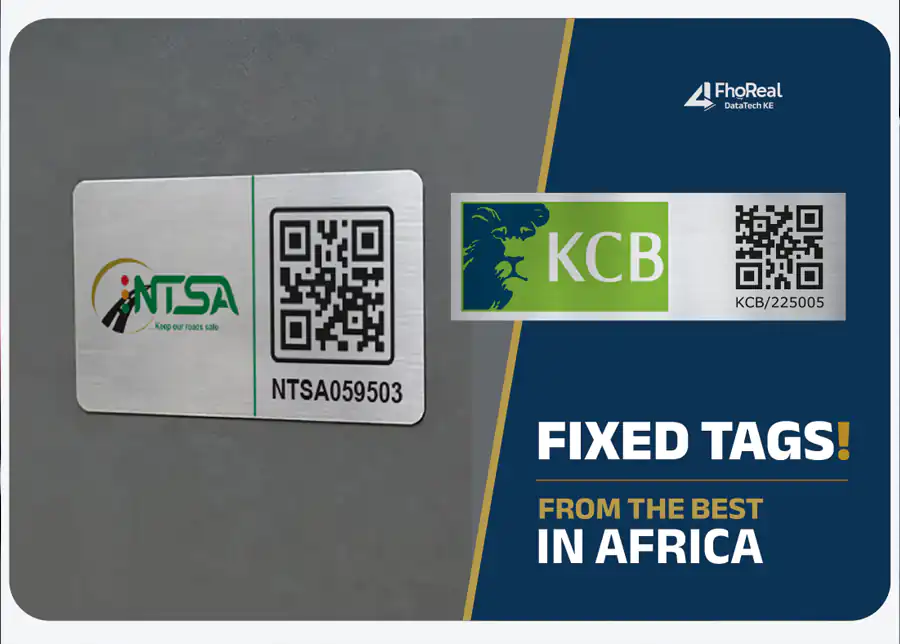
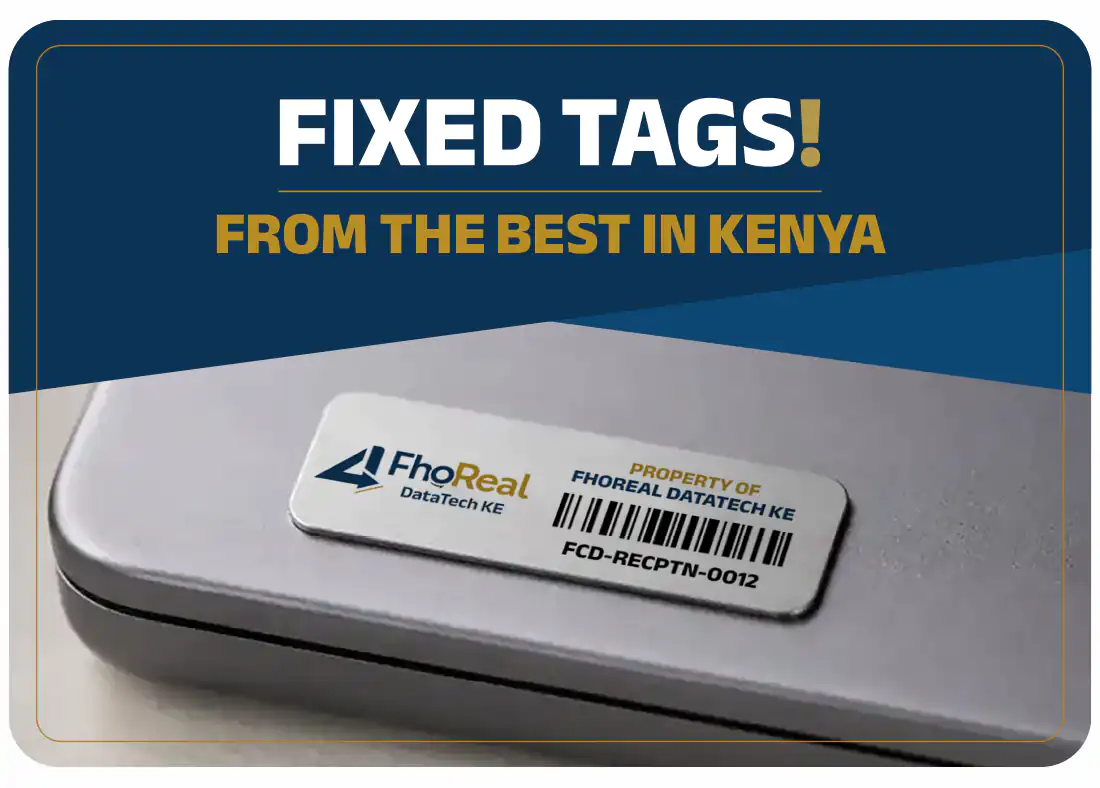
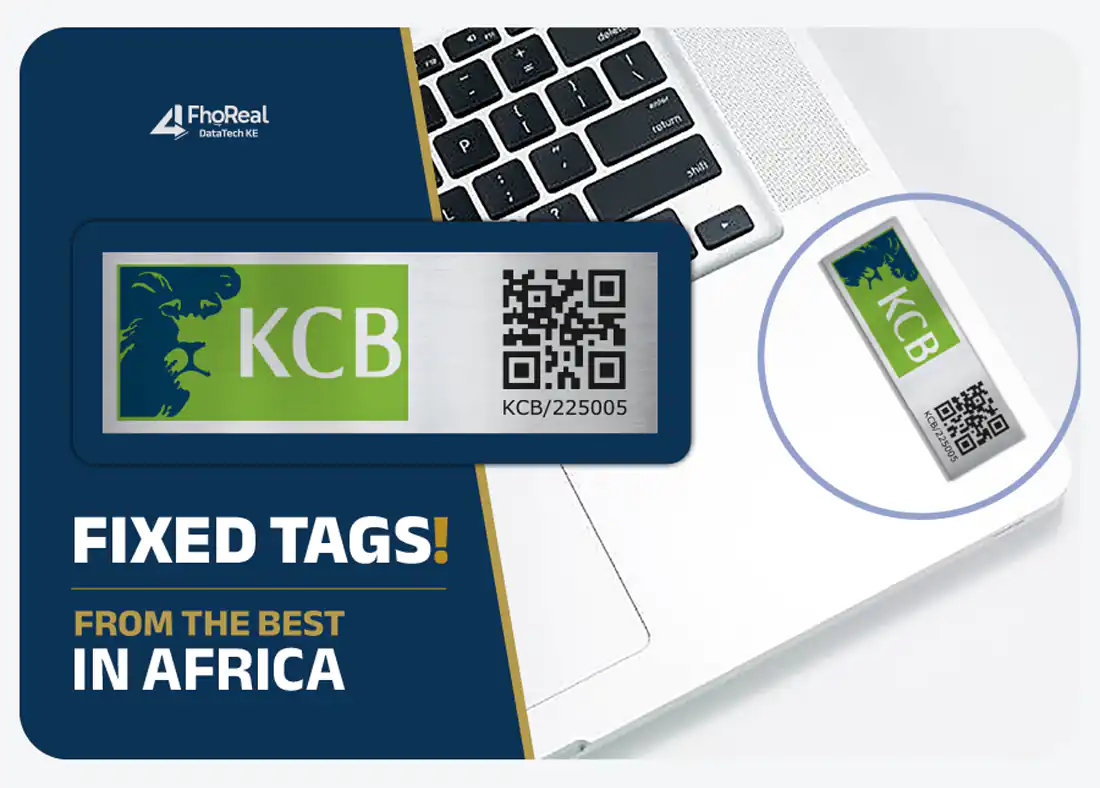
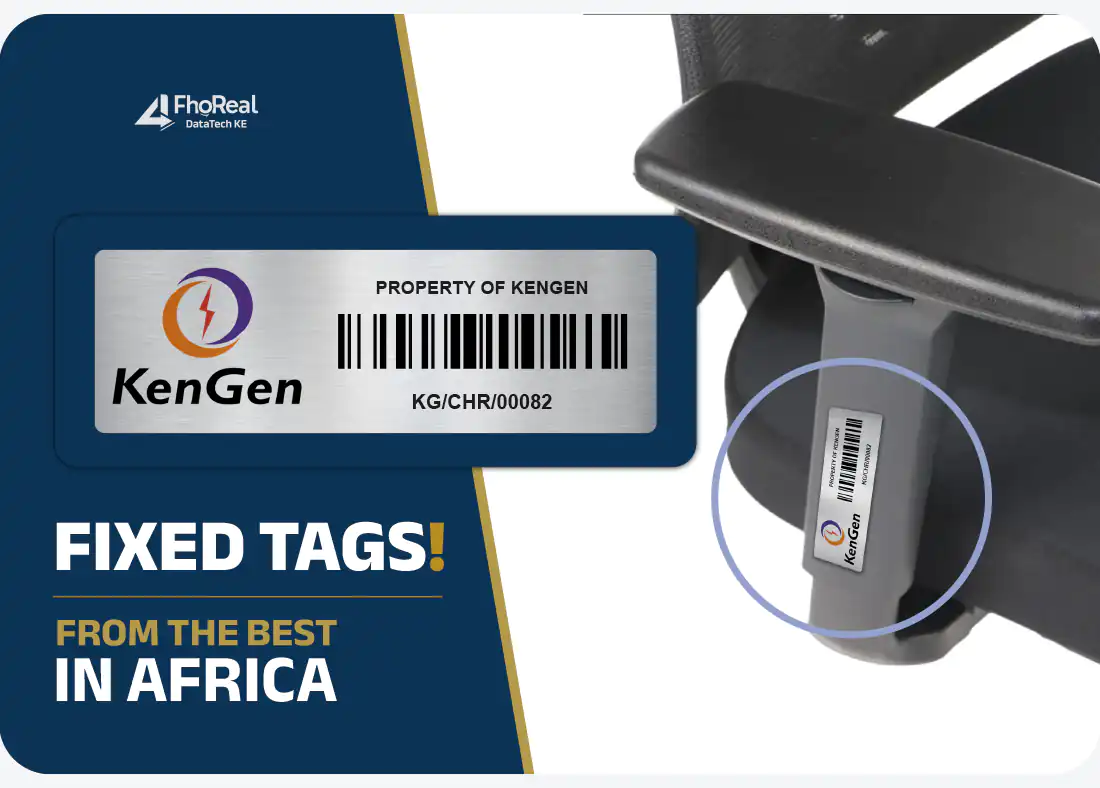
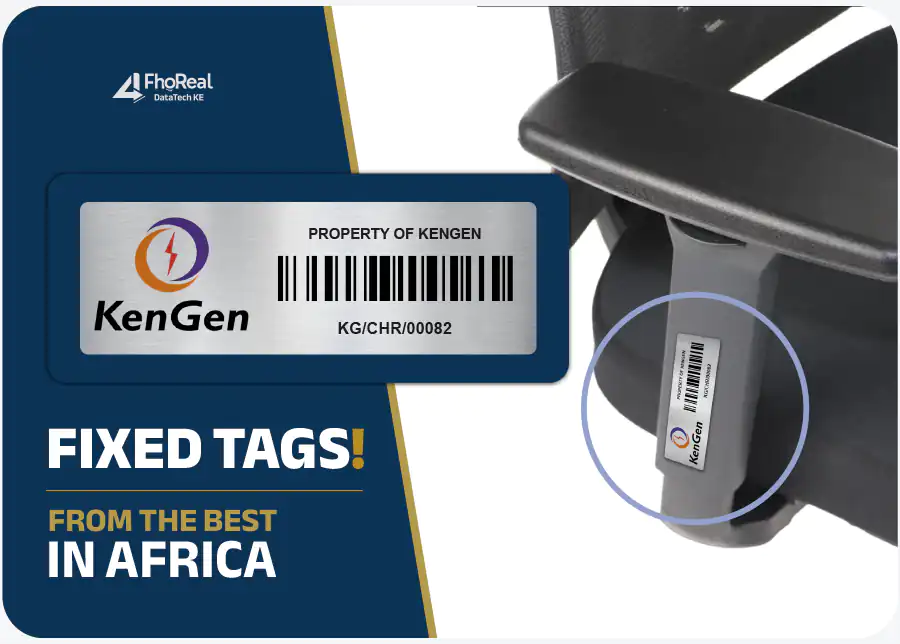
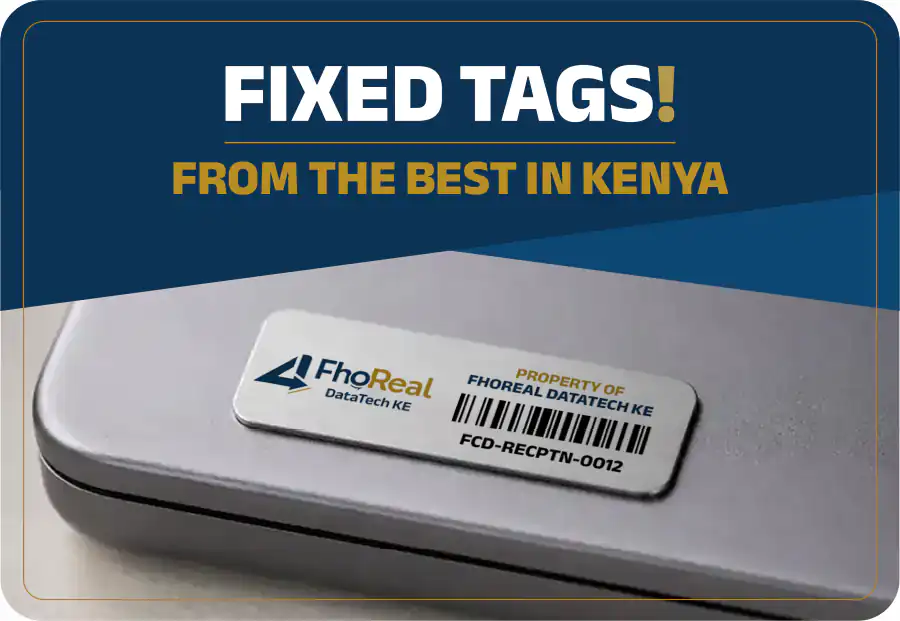
Aluminium is the format most organisations choose when a tag has to stay readable for years on equipment that is moved, cleaned, handled and audited.
- Professional metallic appearance that reads as controlled property
- Holds up to handling and routine cleaning far better than paper labels
- Sequential numbering with optional department or site prefixes
- Barcode integration for scanned verification exercises
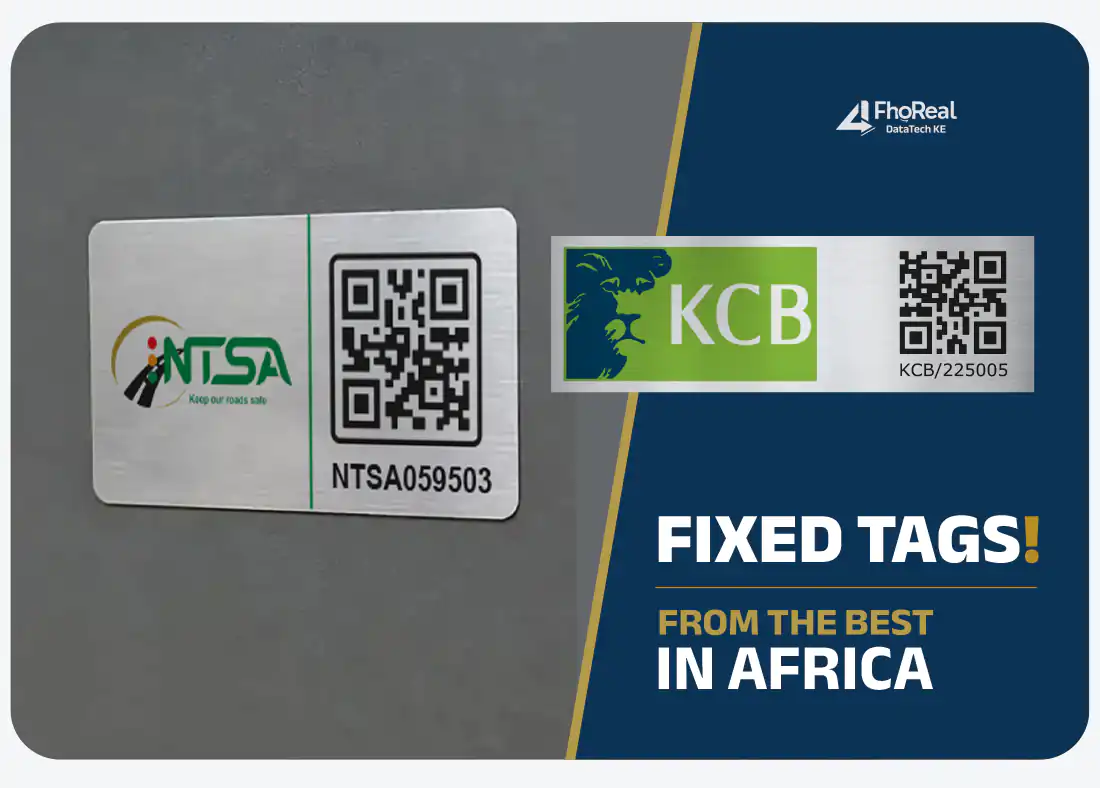
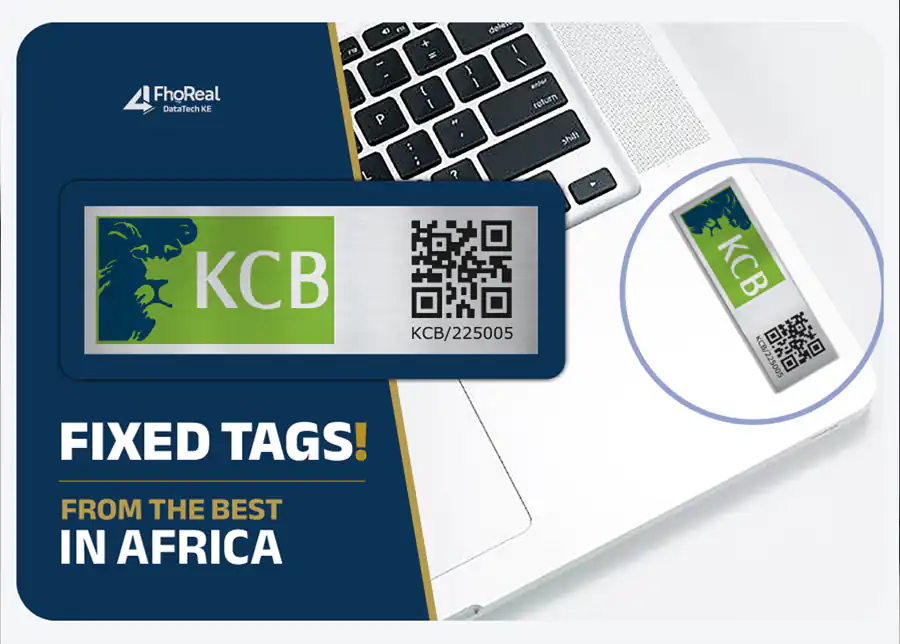
- QR code integration for inspection and maintenance workflows
- Suited to institutional, corporate and industrial asset bases
Tag formats
Asset Tag Types in Kenya
Each format solves a different identification problem. Most organisations combine two — a numbered aluminium tag, plus a barcode or QR code where verification is done by scanning.
Aluminium Asset Tags in Kenya
Custom aluminium tags for durable, long-term asset identification.
View details02Barcode Asset Tags in Kenya
Asset tags carrying a unique barcode for scanned identification.
View details03QR Code Asset Tags in Kenya
QR-enabled tags that connect an asset to digital information.
View details04Serial Asset Tags in Kenya
Sequentially numbered tags for structured asset identification.
View details05Custom Asset Tags in Kenya
Tags designed around your layout, numbering and mounting needs.
View details06Metal Asset Tags in Kenya
Durable metal identification tags for equipment, plant and machinery.
View detailsWhy FhoReal Tags Kenya
One specialisation, applied properly
FhoReal Tags Kenya works on asset tags and asset identification only. That focus shows up in the details that decide whether a tagging exercise succeeds — numbering structure, tag placement, code legibility and fixing method.
Specialist focus
Asset tags and asset identification are the whole business, not a side line.
Numbering done first
The numbering convention is agreed before production, because it is the part that cannot be changed later.
Barcode and QR options
Machine-readable codes where scanning is part of your workflow — and a readable number regardless.
Specification-led
Size, layout, finish and mounting are set against your assets rather than a fixed catalogue item.
Institutional experience of the problem
Guidance written for schools, hospitals, NGOs, corporates and public bodies.
Kenya-wide service
Quotations and supply for organisations across Kenya.
How it works
From requirement to delivered tags
Details such as production time, minimum quantities and delivery arrangements are confirmed at quotation.
- 01
Tell us your requirements
Share your quantity, tag type, dimensions and identification requirements.
- 02
Choose your tag format
Select aluminium, metal, barcode, QR, serial-number or custom options.
- 03
Approve your details
Confirm artwork, numbering and identification information.
- 04
Production
Your asset tags are prepared according to the approved specification.
- 05
Delivery
Receive your completed asset tags.
Industries
Asset tagging in Kenya by sector
Different sectors tag different things, and verify them differently. These pages set out what is usually tagged and how numbering is normally structured.
Schools
School asset registers are difficult to keep accurate because equipment moves between classrooms, laboratories and departments, and because several people share responsibility for it. Tagging gives every item a fixed identity that survives those movements, so a register entry always points to one physical object.
Hospitals
Clinical equipment is shared across wards, theatres and departments, and much of it is subject to servicing and calibration schedules. A durable tag lets staff identify a specific unit — not just a model — when logging a service, reporting a fault or completing a verification exercise.
NGOs
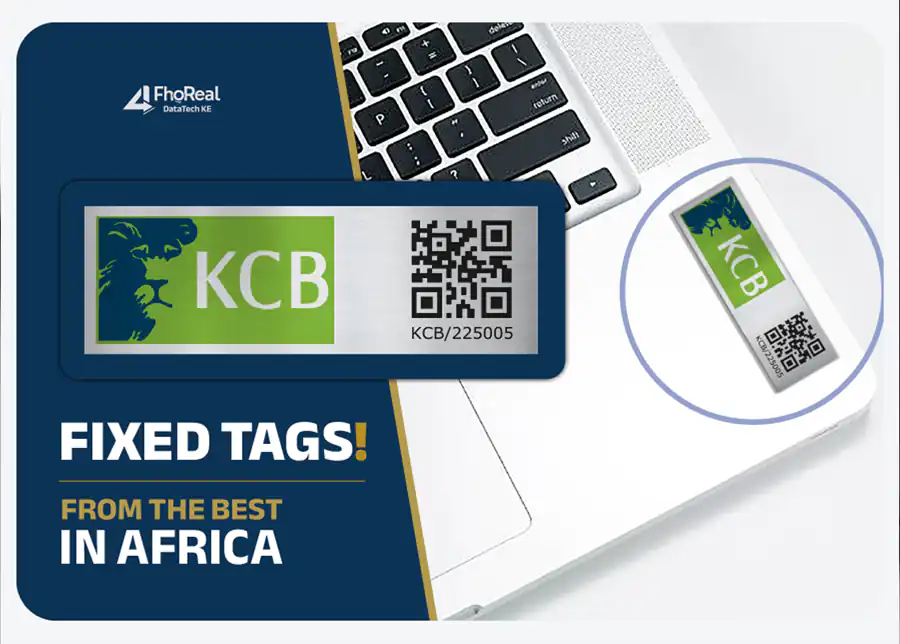
NGOs carry a reporting obligation that most organisations do not: equipment bought under a grant usually has to be accounted for by project, and sometimes handed over at the end of it. Tagging assets at the point of receipt makes those reports straightforward rather than reconstructive.
Corporates
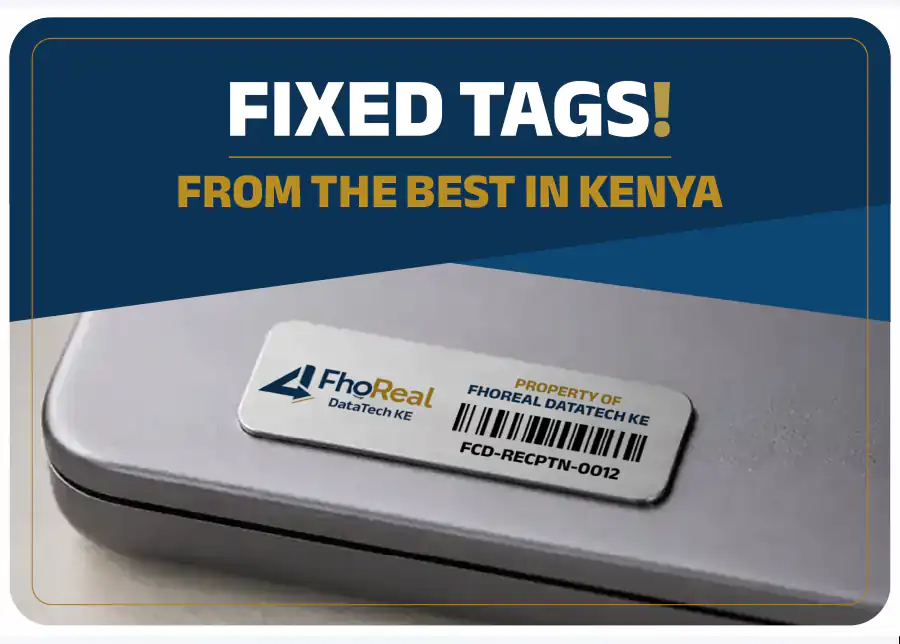
In a corporate environment the asset register is a finance document, and its credibility depends on whether each line can be traced to a physical item. Tagging is what makes that trace possible during a verification exercise or an external audit.
Universities
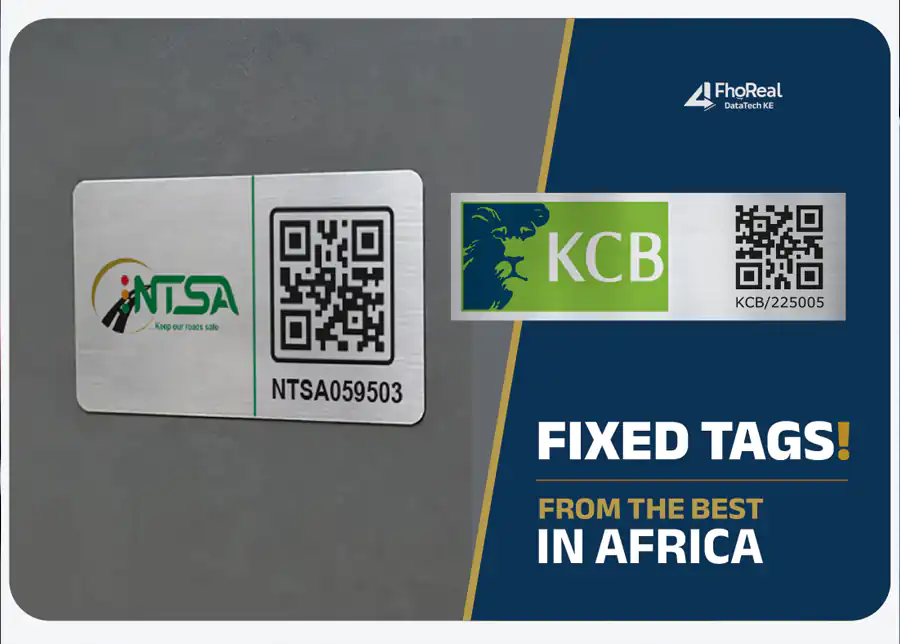
A university asset base is large, distributed and owned in practice by faculties rather than a single department. Tagging works when the numbering convention respects that structure, so a faculty can verify its own equipment while the institution keeps one register.
Government Institutions
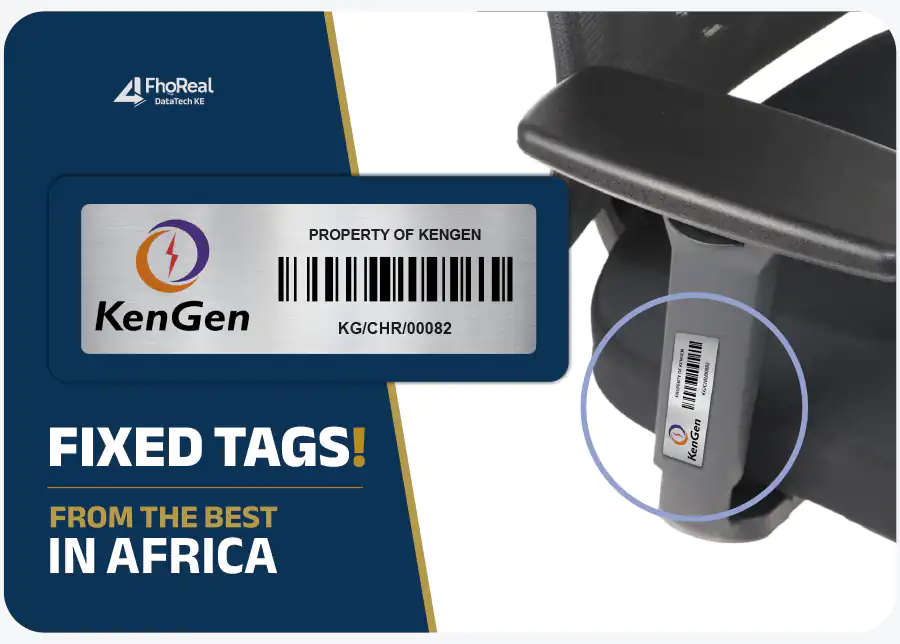
Public bodies are accountable for equipment bought with public funds, and that accountability is exercised through registers and physical verification. A permanent, standardised tag on each item is what makes an inventory exercise defensible.
Hotels
Hotel equipment moves constantly between rooms, stores and maintenance, and much of it exists in near-identical sets. Tagging separates one unit from forty otherwise identical ones, which matters for maintenance history and for stock control.
Manufacturing
On a production floor a tag has to survive vibration, heat, oil and washdown, and it usually has to be readable while the equipment is running. That pushes manufacturing tagging towards heavier metal plates with mechanical fixing.
FAQs
Common questions about asset tags
What are aluminium asset tags?
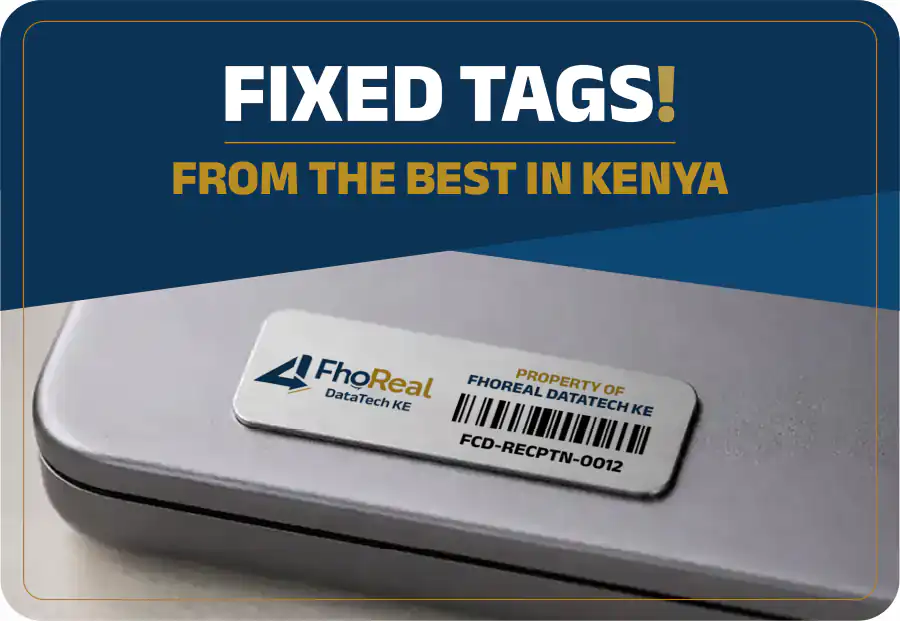
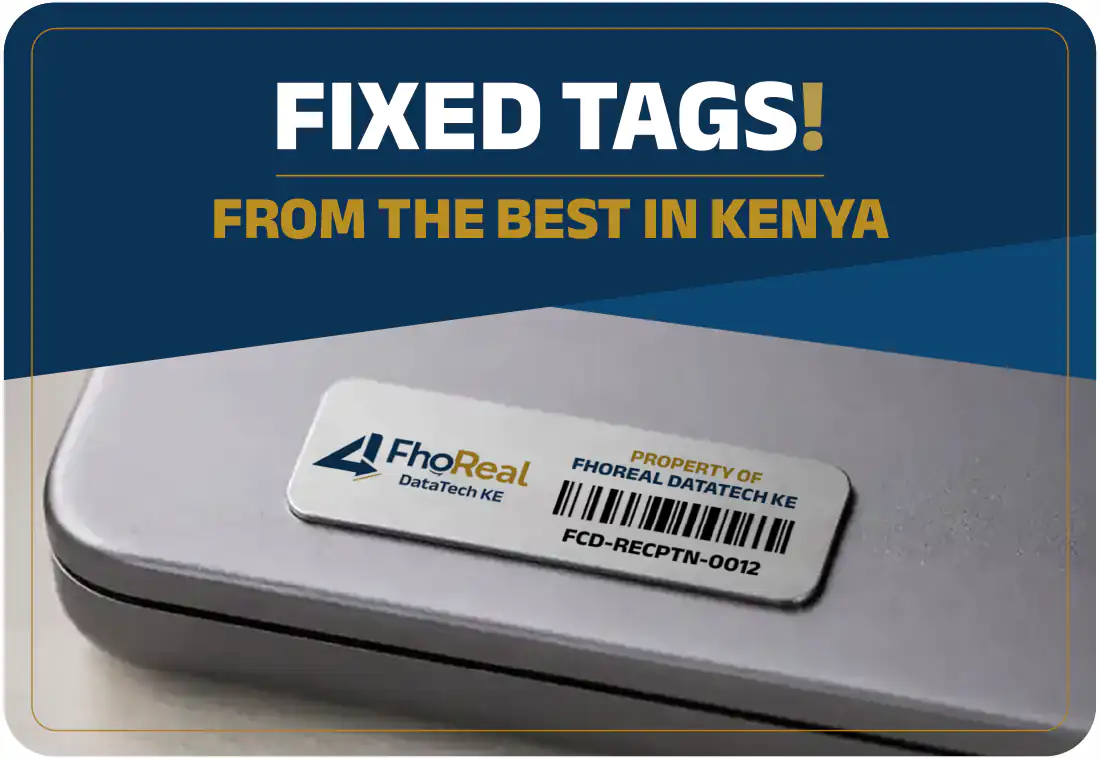
Aluminium asset tags are thin metal identification plates fixed to equipment, furniture or machinery. Each tag carries a unique asset number, and often a barcode, QR code or organisation name, so the item can be identified consistently over its working life.
What information can be included on an asset tag?
Typically an asset number, an organisation name or short form, and a barcode or QR code. Fixed text such as a department name can be added. Information that changes — user, location, condition — belongs in the register rather than on the tag.
Can asset tags be sequentially numbered?
Yes. Tags are commonly produced as a sequential run, with an optional prefix that identifies site, department or asset category.
Can asset tags be customised with a company logo?
Yes, where artwork is supplied or approved. The asset number is normally kept as the dominant element so it stays readable at a glance.
Where can I get asset tags in Kenya?
FhoReal Tags Kenya produces aluminium, barcode, QR code, serial-number and custom asset tags for organisations in Kenya. Send your asset types, quantity and numbering requirements through the quote form and a quotation is prepared against your specification.
What are asset tags in Kenya and why are they important?
Asset tags in Kenya are durable identification labels used by businesses, schools, hospitals, government institutions, NGOs, and other organizations to identify and track physical assets. Asset tags can include an asset number, barcode, QR code, company logo, or other identification details. They help organizations maintain accurate asset registers, simplify physical asset verification, improve accountability, and reduce the risk of asset loss or misplacement.
What are fixed asset tags in Kenya used for?
Fixed asset tags in Kenya are used to permanently or semi-permanently identify assets such as computers, office furniture, machinery, generators, vehicles, medical equipment, electrical equipment, and industrial assets. Each tag can carry a unique asset identification number that corresponds with an organization's fixed asset register, making it easier to verify assets, track their location and condition, and conduct asset audits.
Why choose aluminium asset tags in Kenya?
Aluminium asset tags in Kenya are a popular choice for organizations that need durable asset identification labels. Aluminium tags are lightweight, corrosion-resistant, and suitable for both indoor and outdoor applications. They can be customized with barcodes, QR codes, serial numbers, logos, and other information, making them suitable for corporate, industrial, institutional, healthcare, educational, and government asset tracking applications.
What are acetone-activated asset tags in Kenya?
Acetone-activated asset tags in Kenya use a specialized adhesive system designed to create a strong bond with suitable asset surfaces. The adhesive is activated during application, helping the tag remain securely attached where conventional self-adhesive labels may not provide sufficient adhesion. These tags are particularly useful for asset tagging projects where durability and resistance to removal are important considerations.
What are Barcode asset tags in Kenya and how do they work?
Barcode asset tags in Kenya combine a unique asset identification number with a machine-readable barcode. When the barcode is scanned, it can be linked to the corresponding record in an asset register or asset management system. This makes asset verification, stocktaking, audits, transfers, and inventory management faster and more accurate while reducing manual data-entry errors.
Resources
Practical guidance before you order
Written for procurement, finance, ICT and administration teams who have to make the tagging decision.
What Are Asset Tags and Why Are They Important?
An asset tag is a durable marker fixed to a physical item that gives it one unique, readable identifier. Its job is simple: to make sure a line in your asset register can always be matched to a specific object.
ComparisonsAluminium vs Plastic Asset Tags: Which Is Better?
Neither is universally better. Aluminium suits assets that stay in service for years, are handled often or sit in harsh areas. Plastic and polyester labels suit lighter, shorter-life or high-volume applications where cost per unit matters most.
ComparisonsBarcode vs QR Code Asset Tags
Use barcodes when the task is to capture an asset number quickly with dedicated scanners. Use QR codes when staff will scan with phones, or when the tag should lead to a record rather than only report a number.
Get started
Ready to specify your asset tags?
Send your asset types, quantity and numbering requirements and we will prepare a quotation against your specification.